The pebble coves of Monte Argentario, the sandy tombolos of Feniglia and Giannella and the beaches of the Maremma parks, each with up-to-date sea conditions, so you can choose where to go today.
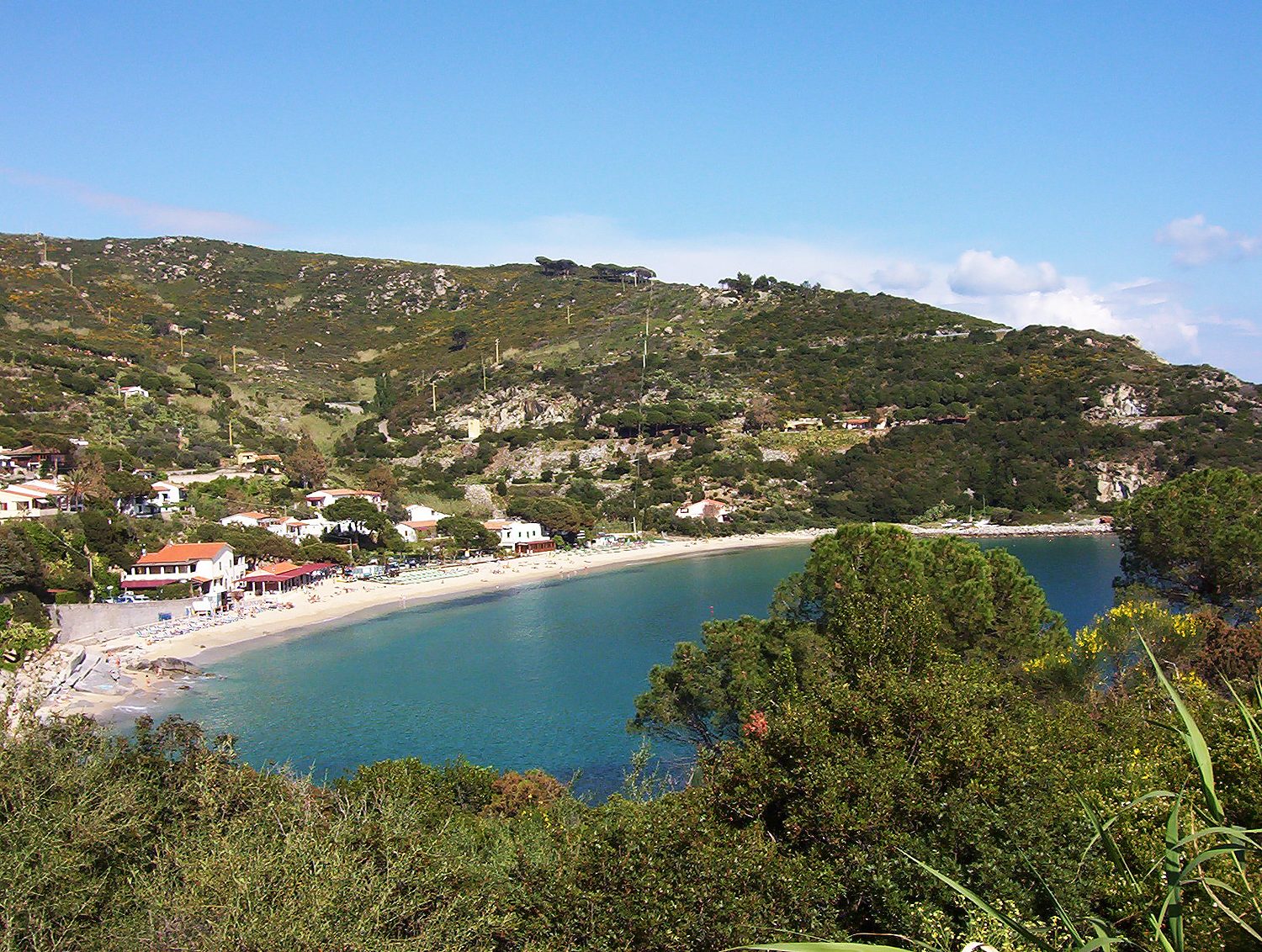
The Argentario and the Maremma coast around Grosseto bring together two very different landscapes: on one side the Monte Argentario promontory, a mountain on the sea with cliffs and pebble coves reachable only on foot or by boat; on the other the long sandy tombolos and the beaches of the nature parks, where the pinewood almost reaches the water. It is a stretch of coast where, on the same day, the sea can be calm on one side and choppy on the other just a few kilometres away.
Below are the most beautiful public beaches, each with today's sea conditions: tap a row to open the full card with waves, wind and water temperature.
The Argentario coves: Cala Grande and Cala del Gesso
On the western side of the promontory lie some of the most beautiful coves in Tuscany: pale pebbles, sheer cliffs and clear water, far from roads and car parks.
Cala Grandeslightly choppy sea · water 24 °C
Three little pebble beaches set between the cliffs, with a seabed rich in posidonia, a sign of sheltered, clean water: it is one of the favourite spots for snorkelling. It can be reached only on foot, along a path of about half a kilometre, or by boat. It is free and has no facilities.
Cala del Gessosea with a few waves · water 24 °C
A crescent of pale pebbles between rock walls, with clear water and the Argentarola islet in front. It is reached on foot along a steep path of about 700 metres, or by boat. Wild and free, it is one of the most striking coves on the promontory.
The tombolos: Feniglia and Giannella
Two strips of sand link the Argentario to the mainland and enclose the Orbetello lagoon. They are very different from each other, and that is their strength: one is sheltered when the other catches the wind.
La Fenigliacalm sea · water 24 °C
A tombolo of fine, pale sand about six kilometres long, with a shallow seabed, inside a nature reserve. The road is closed to cars and motorbikes: you arrive only on foot or by bicycle, crossing the pinewood. It is sheltered from northerly winds such as the mistral and the tramontana.
La Giannellaslightly choppy sea · water 24 °C
A tombolo of sand about eight kilometres long, with a seabed that slopes down gently. It is sheltered from southerly winds such as the scirocco and the libeccio, but stays breezy: that is why it is popular with windsurfers and sailors. Together with the Feniglia it covers opposite wind directions, so between the two there is almost always a calm side.
Talamone and the beaches of the parks
To the north the coast enters the Maremma Park: small gravel beaches below Talamone and wild shores reachable only through regulated access.
Talamonesea with a few waves · water 24 °C
Cala del Cannonesea with a few waves · water 24 °C
Bagno delle Donnesea with a few waves · water 24 °C
Below the village of Talamone lie small gravel beaches among the rocks: the Bagno delle Donne, tucked between the rocks, and the Cala del Cannone, with a rocky seabed and access by a stairway. It is a stretch loved by kiters and windsurfers too, because the thermal wind often coexists with a calm sea close to shore.
Marina di Alberesecalm sea · water 23 °C
In the heart of the Maremma Park, a fine-sand beach with crystal-clear water and large tree trunks bleached by the salt along the shore. Access is heavily regulated, with few cars, a shuttle and a cycle path of about eight kilometres. It is not equipped: you come for the landscape, not the facilities.
When the sea is calm on the Argentario and in the Maremma
The practical rule on this coast is the game of the tombolos. With northerly winds such as the mistral and the tramontana, the Feniglia stays sheltered while the Giannella picks up; with southerly winds such as the scirocco and the libeccio, it is the other way round. The western coves of the Argentario, such as Cala Grande and Cala del Gesso, are generally protected from the swell and are at their best in settled weather, while they feel westerly winds, the ponente and the libeccio. MareCalmo takes into account each beach's exposure to wind and waves, so you can see at a glance where the sea is calmest today.
Practical tips
- Choose the wind side. If it blows from the north head for the Feniglia, if it blows from the south for the Giannella: between the two tombolos there is almost always a sheltered one.
- Go early. In the morning the sea is usually calmer, before the breeze picks up, and parking is easier to find.
- Water shoes and water for the coves. The Argentario beaches are reached on foot along steep, stony paths, with no facilities on site.
- Check flags and ordinances. The Harbour Master's notices and the parks' access rules always come before the forecast.
Frequently asked questions
Which is the most beautiful beach on the Argentario?
Cala Grande and Cala del Gesso are among the most loved on the promontory, but there is no single most beautiful beach: there is the most beautiful one today. With the right wind an isolated cove is perfect; with the wind against it, it turns uncomfortable and choppy. That is why it is worth checking the sea conditions before you set off.
Tombolos or Argentario coves?
It depends on the wind and on what you are after. The Feniglia and Giannella tombolos are sandy, with shallow seabeds, handy with children and easy to reach; the Argentario coves are pebbly, wilder and reachable only on foot or by boat. With a northerly wind the Feniglia is best, with a southerly wind the Giannella.
When is the sea calmest?
Usually early in the morning and, depending on the wind, on the sheltered tombolo of the moment: the Feniglia with northerly winds, the Giannella with southerly ones. The calm sea today page shows you in real time where to find it now.
Some links are affiliate links: booking helps support MareCalmo, at no extra cost to you.