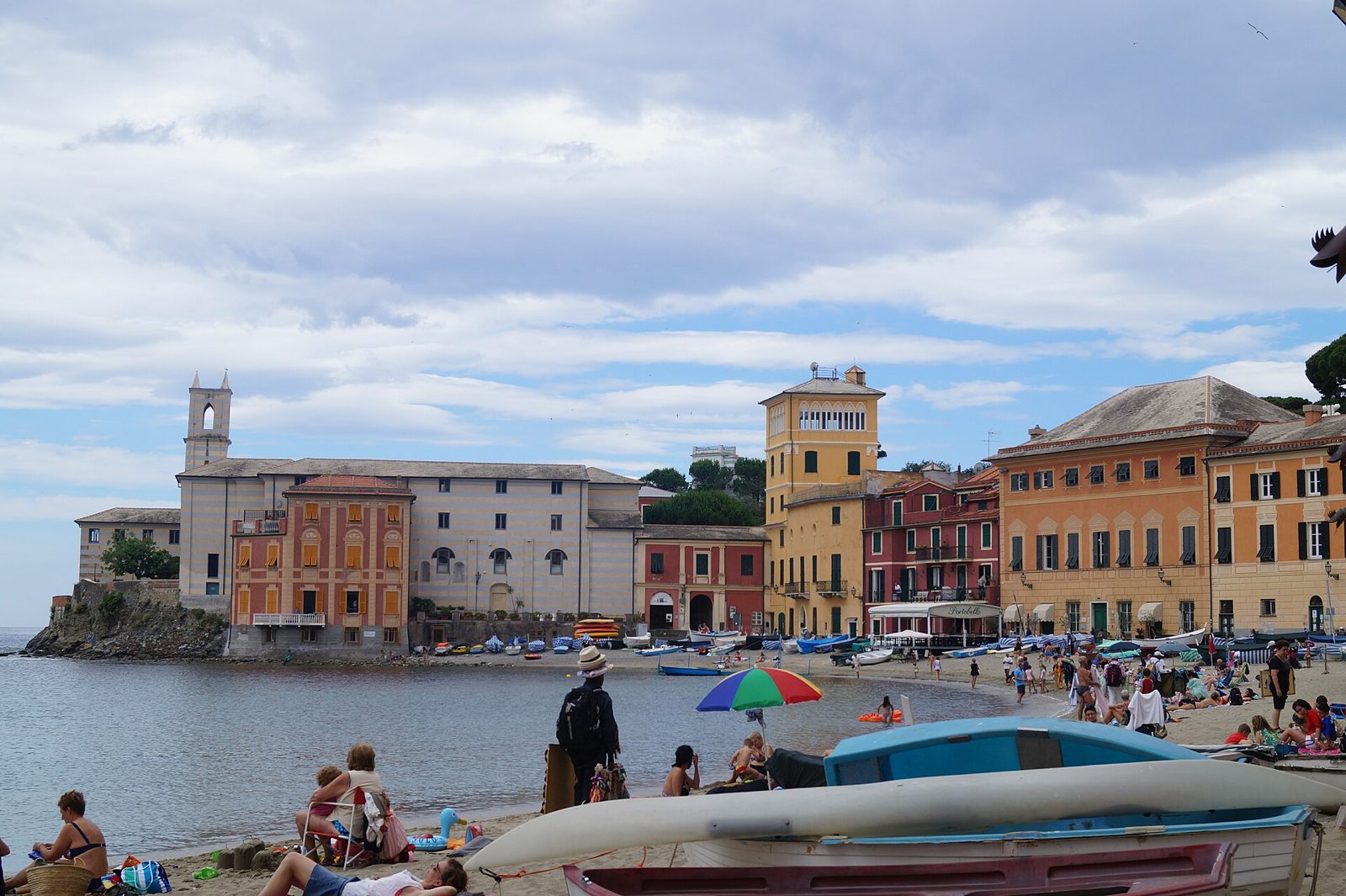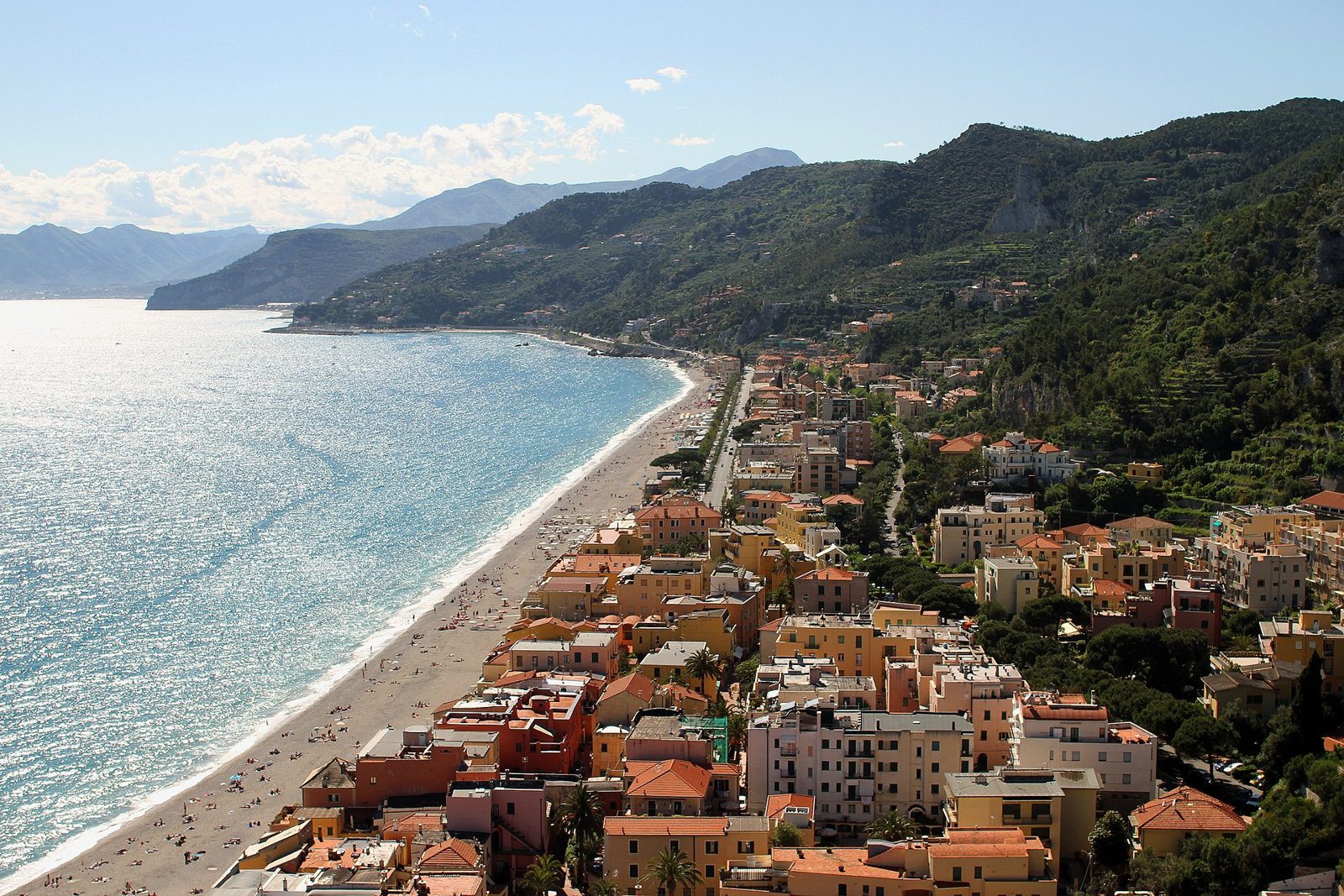
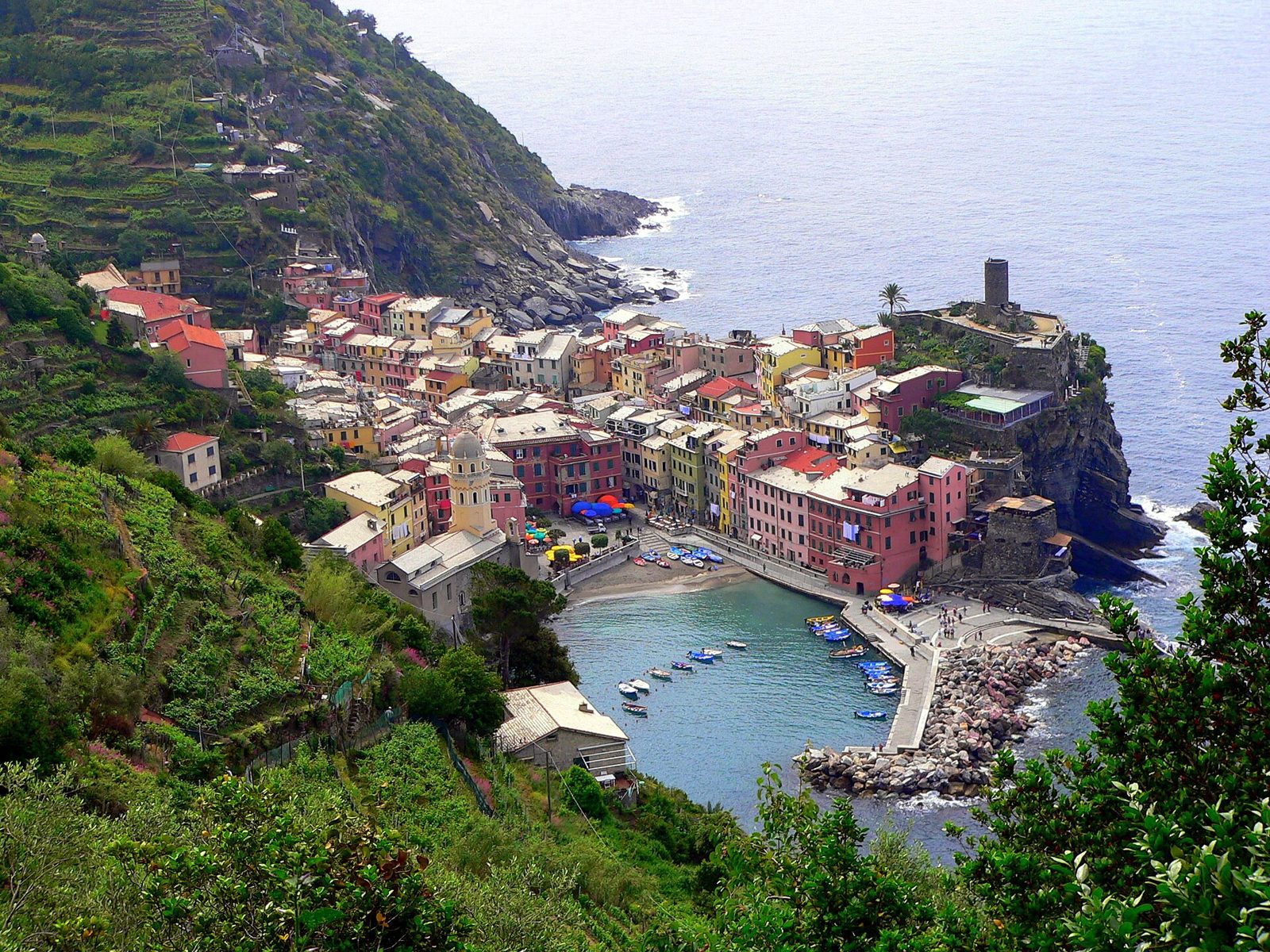
In the Cinque Terre mostly rocks and pebbles, with Monterosso the only sandy beach; calmer are Levanto, Bonassola, Framura and the sheltered Gulf of Poets around Lerici, each with today's sea conditions.
In the Cinque Terre the word beach should be taken with caution: between Monterosso and Riomaggiore the coast is made mostly of rocks, pebbles and large boulders, and the villages drop straight into the sea. Monterosso is the exception, the only one with a real stretch of sand. The whole area lies within the Cinque Terre National Park and the Marine Protected Area, so it is clean but fragile.
Further north, towards Levanto, Bonassola and Framura, and to the south in the Gulf of Poets around Lerici, you find wider beaches and sheltered coves. Below are the spots where you can swim, each with today's sea conditions: tap a row to open the full card with waves, wind and water temperature.
The Cinque Terre: where you can actually swim
Monterosso is the only village with a sandy beach; in the others you slip into the water from rocks and ladders. With a rough sea, the pebbles and boulders of Riomaggiore are best avoided.
Spiaggia di Fegina (Monterosso)calm sea · water 23 °C
The only true beach in the Cinque Terre: sand and small pebbles in the Fegina district, with free stretches and beach clubs, and the station facing the seafront. It is the handiest village if you want somewhere to lay out a towel.
Manarolasea with a few waves · water 23 °C
No sand here: you swim from the rocks and from areas fitted with ladders that drop into the water, at the foot of the colourful houses. Beautiful to photograph, it calls for water shoes and a calm sea.
Riomaggiorecalm sea · water 23 °C
A beach of rocks and large boulders, with no sand, tucked beneath the village. With a rough sea it becomes dangerous: better to go with flat water and care where you put your feet.
Vernazza has a small beach in its little harbour, partly sandy, plus a stretch of pebbles reached through a tunnel. Corniglia is the only village with no direct access to the sea, set on a hill: its Marina is a rocky landing reached by a long stairway.
Levanto, Bonassola and Framura
Just north of the Cinque Terre the coast opens up: wider beaches, pebbles and rocky coves, linked together by the cycling and walking path built along the old railway.
Levanto has a long beach of sand and small stones, with wide free stretches and beach clubs. It is exposed to the libeccio (from the southwest) and the mistral (from the northwest): when they blow they bring the waves that make it a small surfing spot.
Bonassola is a pebble beach, free and with clubs, tucked into its bay. The cycling and walking path links it conveniently to Levanto and Framura, on foot or by bike.
Cala Torsei (Framura)calm sea · water 23 °C
At Framura the sea is made of small rocky coves, such as Torsei and the Fornaci, many reachable only by sea or from the cycling path. They are secluded corners, to be tackled when the water is calm.
The Gulf of Poets: San Terenzo, Fiascherino and Tellaro
Around Lerici opens the Gulf of Poets, sheltered from the libeccio and among the calmest stretches of the whole coast: here the sand returns, alongside gravel inlets and rocky coves.
San Terenzo (Lerici)calm sea · water 23 °C
Fine sand and a beach protected by the castle headland, with shallow seabeds: one of the most convenient beaches in the gulf, suitable for families and sheltered from the most frequent winds.
Fiascherino is made of small inlets of sand and gravel, set among the greenery and the rocks, tucked away and picturesque. Tellaro, the village at the far end of the gulf, has difficult coves of rock and gravel, reached only by sea or by steep paths.
When the sea is calm in the Cinque Terre and the Levante
The most feared wind here is the libeccio, from the southwest, followed by the mistral and the tramontana. The Cinque Terre and Levanto side faces south and southwest, so it picks up precisely with the libeccio, while it stays calmer with the tramontana and with light scirocchi. The Gulf of Poets, around Lerici, is instead sheltered from the libeccio: on days when the sea is rough elsewhere, here you often find calm water. The practical rule: with a libeccio move your trip towards the gulf and the sheltered coves; with a tramontana the Cinque Terre seafront becomes enjoyable again. MareCalmo takes into account each spot's exposure to wind and waves, so you can see at a glance where the sea is calmest today.
Practical tips
- Water shoes almost essential. Among rocks, boulders and pebbles you walk on hard, sometimes slippery surfaces: protect your feet.
- Arrive by train. The Cinque Terre villages are linked by the railway and parking is scarce and expensive: the train is often the most convenient choice.
- Go early. In the morning the sea is usually calmer, before the breeze picks up, and the small beaches fill up quickly.
- Check flags and ordinances. Inside the Marine Protected Area specific rules apply, and the Harbour Master's notices always come before the forecast.
Frequently asked questions
Do the Cinque Terre have sandy beaches?
Almost none. Monterosso, in the Fegina district, is the only village with a real stretch of sand and small pebbles. In the other villages you swim from rocks, boulders and areas fitted with ladders: no sand. For wider beaches it is best to move to Levanto or to the Gulf of Poets around Lerici.
Can you go to the Guvano beach?
No. The historic naturist beach of Guvano, below Corniglia, can no longer be reached: the tunnel that led to it has been closed since 2016 because of landslides, and access is forbidden.
When is the sea calmest?
Usually early in the morning and, in a libeccio, in the sheltered Gulf of Poets. The calm sea today page shows you in real time where to find it now.
Some links are affiliate links: booking helps support MareCalmo, at no extra cost to you.