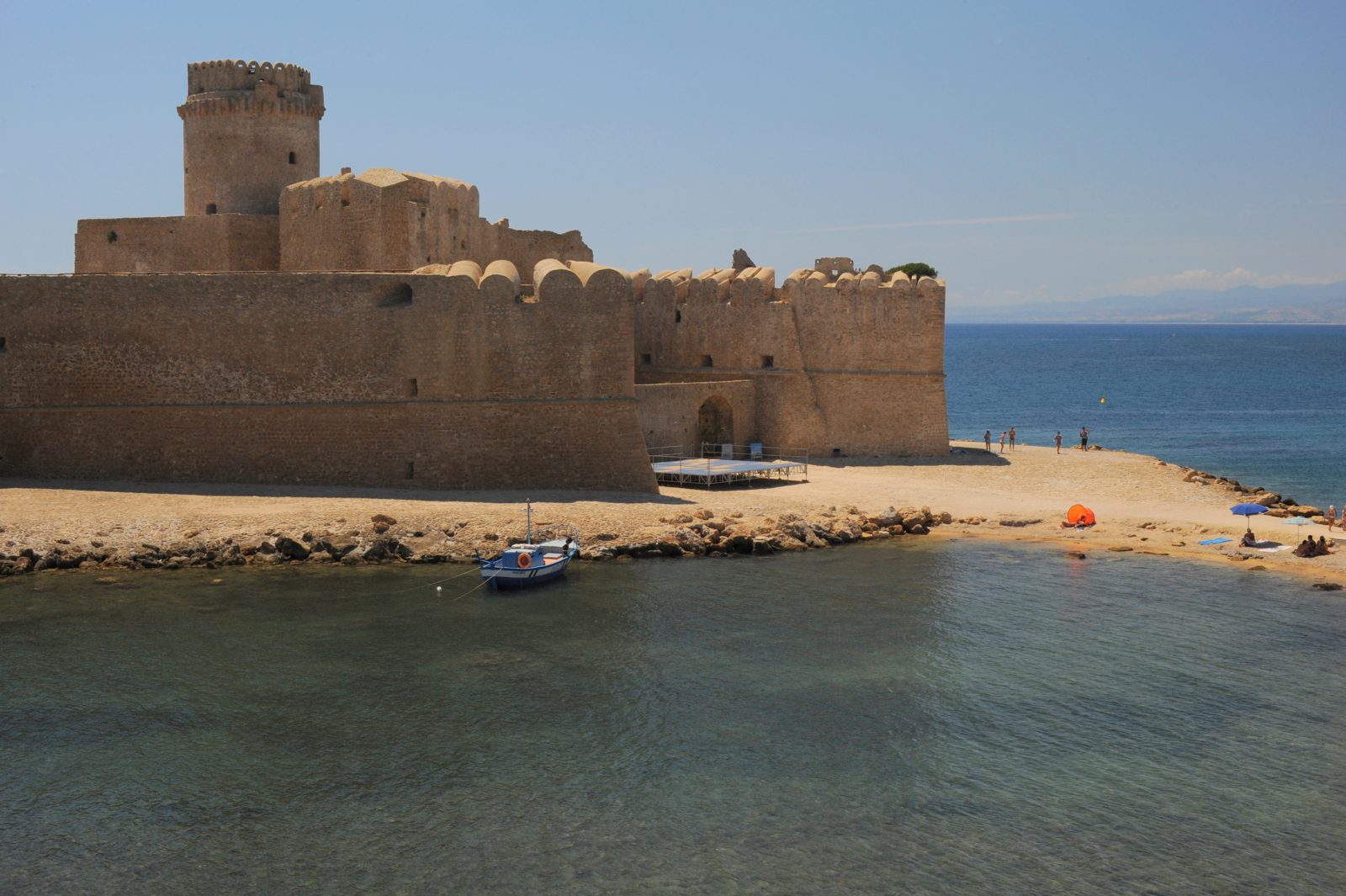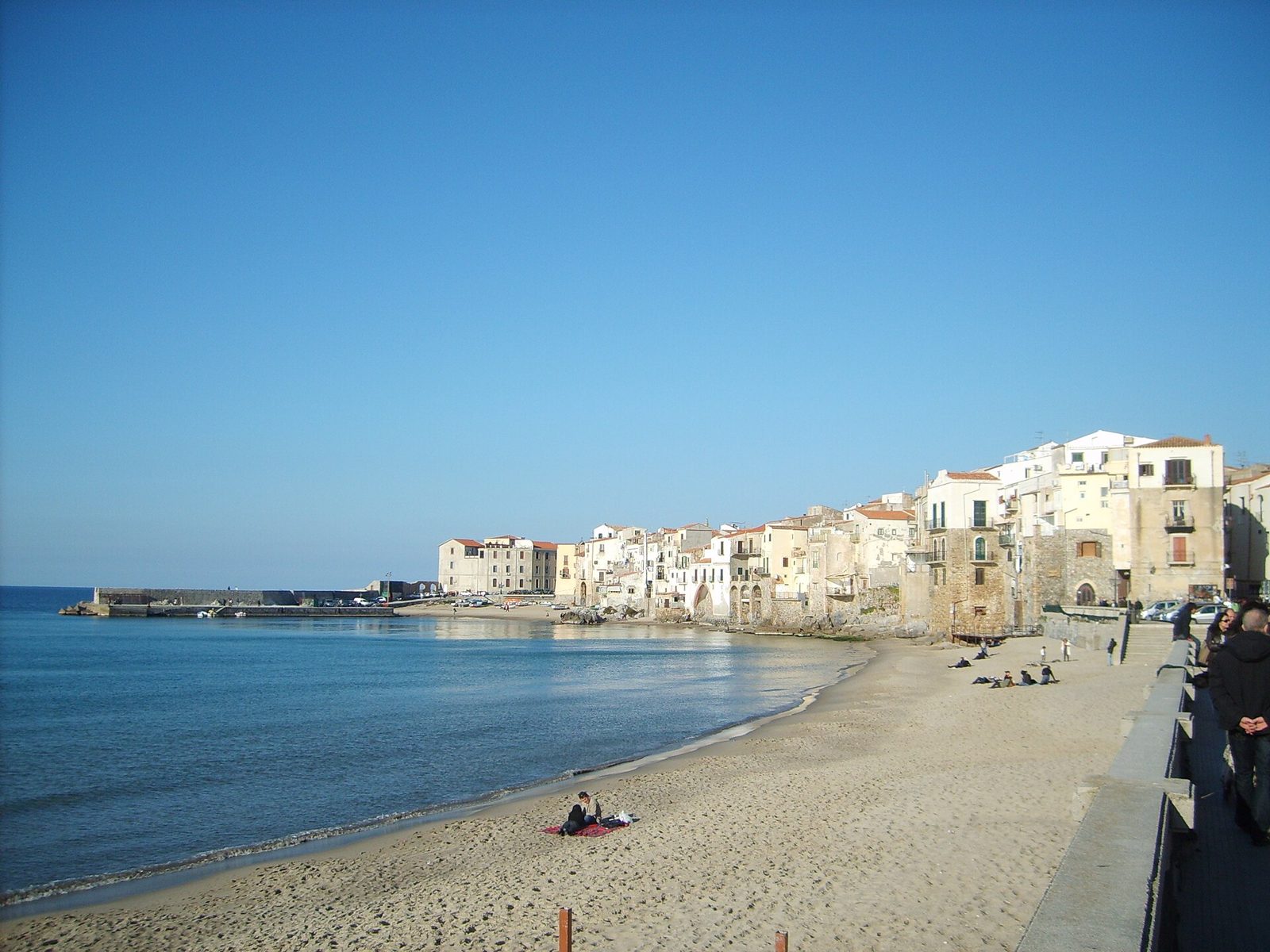
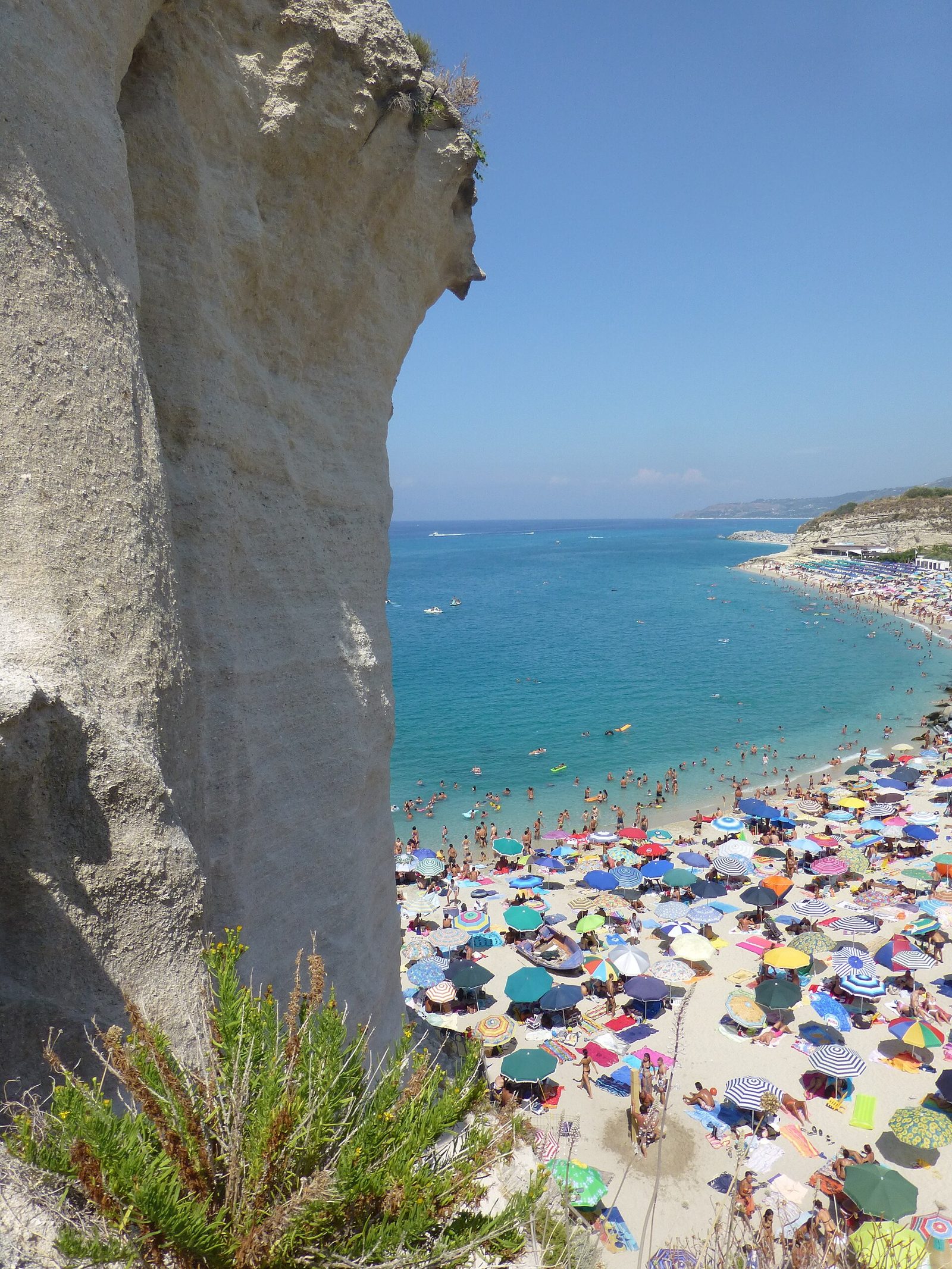
From Tropea and Capo Vaticano to Scilla and Palmi, the white-sand beaches and coves of the Calabrian Tyrrhenian, each with up-to-date sea conditions so you can choose where to go today.
The Tyrrhenian stretch of southern Calabria gathers two famous coasts: the Costa degli Dei, in the province of Vibo Valentia, from Pizzo to Tropea and on to Capo Vaticano and Nicotera, and a little further south the Costa Viola, in the province of Reggio Calabria, from Bagnara to Scilla and Palmi. Very fine white sand, sheer cliffs and crystal-clear water: it is one of the most scenic coastlines in the South.
It is a coast facing west and southwest, so it looks towards the sunset, but also towards the winds of the open sea. Below are the most beautiful public beaches, area by area, each with today's sea conditions: tap a row to open the full card with waves, wind and water temperature.
Tropea and its beaches
Tropea is the heart of the Costa degli Dei: the old town perches on a cliff, and at its foot open beaches of very white sand, with the headland of Santa Maria dell'Isola as a backdrop.
Spiaggia della Rotondaslightly choppy sea · water 23 °C
Fine, very white sand at the foot of the Santa Maria dell'Isola headland, with crystal-clear water. It is reached on foot from the centre of Tropea.
Spiaggia del Cannoneslightly choppy sea · water 23 °C
Near the Rotonda but more sheltered, protected by the Scoglio di San Leonardo. It is a good choice when the sea is a little choppy along the rest of the shore.
Spiaggia del Conventoslightly choppy sea · water 23 °C
Another white-sand beach in the heart of Tropea, below the cliff: convenient and central.
Capo Vaticano and Ricadi: the white-sand coves
Around Capo Vaticano, in the municipality of Ricadi, the coast is a succession of granite cliffs and coves of very fine white sand, among the most beautiful on the Tyrrhenian.
Grotticellesea with a few waves · water 23 °C
Three coves of fine white sand with a sandy seabed, well sheltered beneath the cliffs of Capo Vaticano. They are reached by a stairway and the car park is paid.
Praia i Focusea with a few waves · water 23 °C
A small beach of pale sand closed off by the cliff, reachable almost only by sea and well sheltered by the rocks.
Spiaggia di Riacislightly choppy sea · water 23 °C
In the hamlet of Santa Domenica, a bay of grainy white-golden sand and pebbles, about 500 metres long, with the Scoglio Grande offshore. The seabed soon turns deep; the bay is sheltered.
Pizzo and the Gulf of Sant'Eufemia
North of the Costa degli Dei, Pizzo overlooks the gulf with white-sand beaches and small coves at the foot of the Murat Castle.
La Seggiolacalm sea · water 24 °C
A small sheltered fjord at the foot of the Murat Castle, tucked among the rocks. The Marinella beach, of fine white sand, and Colamaio, the longest with a pine wood behind it, round out what Pizzo has to offer.
The Costa Viola: Bagnara, Scilla and Palmi
Further south, towards the Strait of Messina, the coast becomes the Costa Viola: cliffs sheer above the sea, beaches of sand and pebbles and villages overlooking the water. This whole stretch lies within the "Costa Viola e Monte Sant'Elia" SCI of the Natura 2000 network.
Marinella di Bagnaraslightly choppy sea · water 23 °C
At Bagnara Calabra, a beach of mixed sand, gravel and pebbles, with a gravelly seabed. It lies within the Costa Viola Natura 2000 area.
Scilla, Marina Grandesea with a few waves · water 23 °C
Sand and fine gravel at the foot of the Ruffo Castle, about 800 metres long. Next to it, the village of Chianalea, with its houses overlooking the water, is nicknamed "little Venice": it is not a bathing beach, but the walk is worth it.
Marinella di Palmislightly choppy sea · water 23 °C
A pebble cove with steep seabeds, popular with divers, below Monte Sant'Elia. Not far away opens the Tonnara di Palmi, a long mixed beach, with pebbles at the water's edge and then sand, with the Sentiero del Tracciolino running above.
When the sea is calm on the Calabrian Tyrrhenian coast
This coast faces west and southwest, so it is the reverse of the Ionian: it rises with winds coming in from the sea and calms with those off the land. With the Ponente (from the west), the Libeccio (from the southwest) and the Maestrale (from the northwest) the sea tends to build up; with the Levante (from the east), the Grecale (from the northeast) and the Tramontana (from the north) it usually stays calm. Often the best moment is the morning, before the afternoon breeze picks up. MareCalmo takes into account each beach's exposure to wind and waves, so you can see at a glance where the sea is calmest today.
Practical tips
- Go early. On this coast the sea is often calmer in the morning, before the afternoon breeze, and parking is easier to find.
- Water shoes help. Several beaches, especially on the Costa Viola, have pebbles at the water's edge and gravelly seabeds.
- Coves by sea. Some coves at Capo Vaticano and on the Costa Viola can only be reached by boat or by steep paths: set off prepared.
- Check flags and ordinances. The Harbour Master's notices always come before the forecast.
Frequently asked questions
Which is the most beautiful beach on the Costa degli Dei?
Spiaggia della Rotonda in Tropea and the coves of Capo Vaticano such as Grotticelle are among the most famous, but there is no single most beautiful beach: there is the most beautiful one today. With the right wind a postcard cove is perfect; with the wind against it, it turns choppy and gusty. That is why it is worth checking the sea conditions before you set off.
What is the difference between the Costa degli Dei and the Costa Viola?
They are two neighbouring stretches of the same Tyrrhenian coast. The Costa degli Dei is in the province of Vibo Valentia, from Pizzo to Tropea and Capo Vaticano, and is famous for its very fine white sand. The Costa Viola is further south, in the province of Reggio Calabria, from Bagnara to Scilla and Palmi, with sheer cliffs and beaches of sand and pebbles, inside a Natura 2000 area.
When is the sea calmest?
Usually in the morning, before the afternoon breeze, and when the wind blows off the land (from the east or the north). The calm sea today page shows you in real time where to find it now.
Some links are affiliate links: booking helps support MareCalmo, at no extra cost to you.