The Conero beaches from Ancona to Sirolo and Numana: white cliffs, pebbles and sheltered coves. Where to find calm sea depending on the wind.
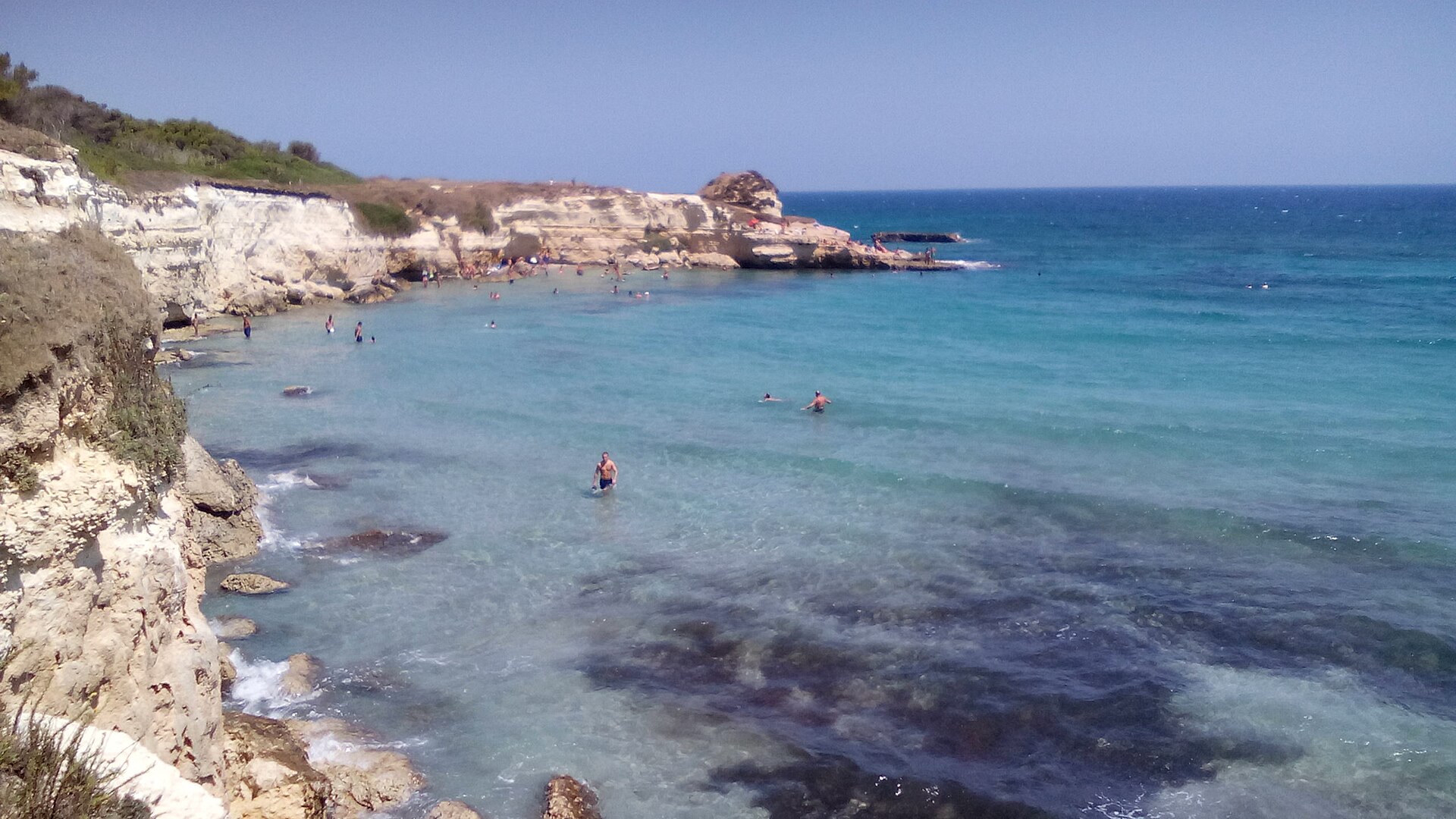
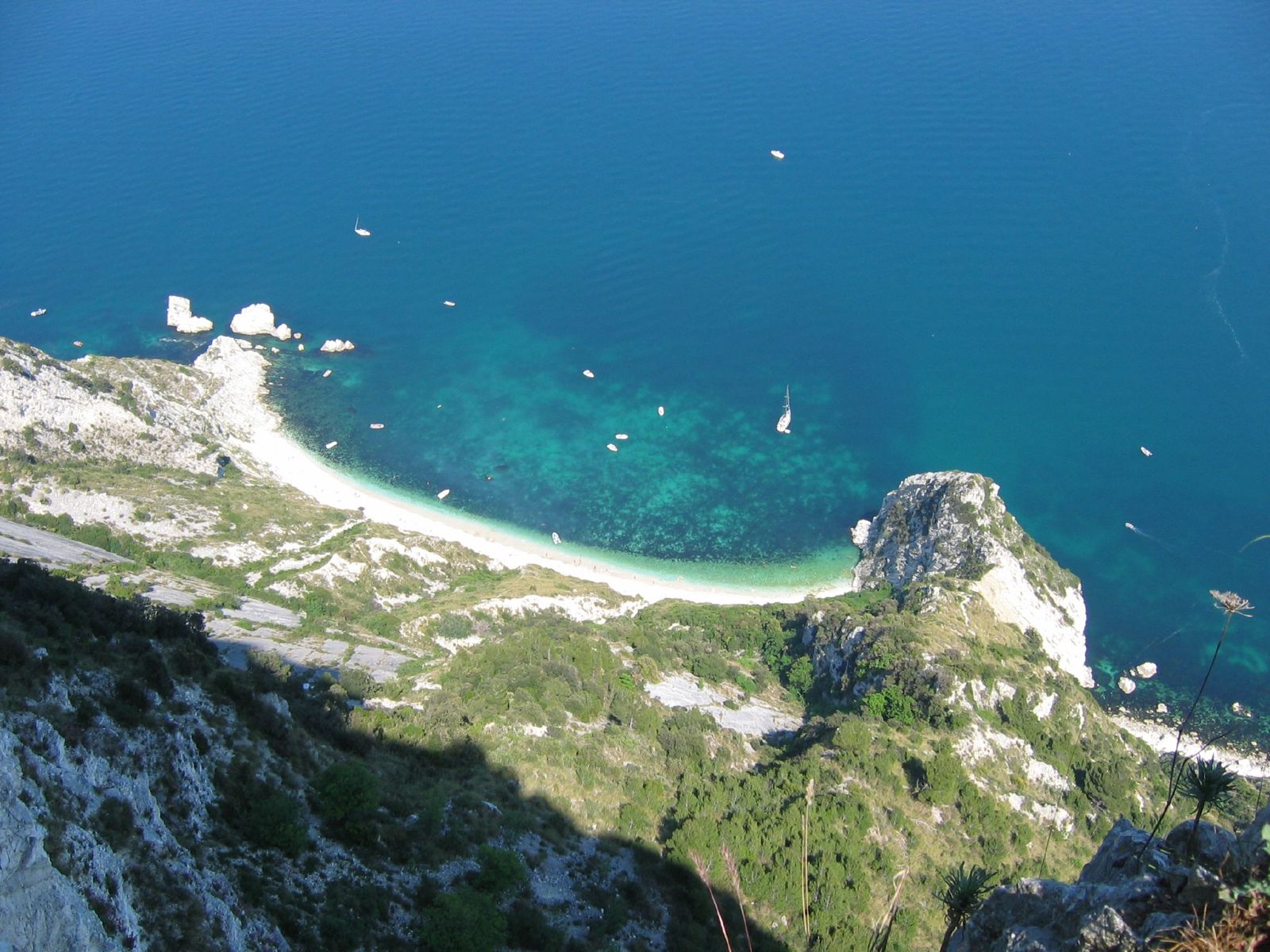
The Riviera del Conero is the stretch of Marche coast running from Ancona to Numana, by way of Sirolo, dominated by the headland of Monte Conero. It is a rarity on the Adriatic: a high, rocky coast, white cliffs dropping sheer to the sea, beaches of gravel and pale pebbles with the odd stretch of sand, and water that turns turquoise. Camerano, the area's fourth municipality, lies inland and has no beaches.
The headland changes everything: it shelters the coast from the northerly winds but leaves the south-east-facing sides exposed to other quarters. Below are the best-known beaches, with today's sea conditions for the ones we monitor: tap a row to open the full card with waves, wind and water temperature. For the beaches without a card you will still find practical notes.
Sirolo's signature beaches: Due Sorelle, San Michele and Sassi Neri
Beneath the cliffs of Sirolo lie some of the most photographed beaches in the Marche: white pebbles, walls of pale rock and clear water.
The beach at the foot of the town of Sirolo, the starting point for exploring the Conero coast. From here and the nearby Parco della Repubblica you can reach the wildest coves of the headland on foot.
White pebbles below the cliff, with the two sea stacks that give it its name (the "Two Sisters"): it is the symbol of the Conero. It can be reached only by sea, on the ferry boats from Numana and Sirolo, because access from land is forbidden by ordinance. In summer there is limited access with mandatory online booking: those arriving with the ferry operators do not need to book. No facilities on site.
Two adjacent stretches reached on foot from the Parco della Repubblica or by the summer shuttle. San Michele is pale fine sand and gravel under the pine wood, with white cliffs behind, and is a windsurfing spot because it is exposed to the mistral from the northwest. The Sassi Neri take their name from the dark boulders and rocks on the seabed, among the white pebbles.
Fine gravel and pebbles in a tucked-away bay, with a cave carved into the cliff. It is reached on foot or by the shuttle.
Numana: beaches sheltered by the Conero
To the south the headland protects the beaches of Numana Alta from the northerly winds and the mistral, while heading down towards Marcelli the coast becomes more open and windier.
Numanacalm sea · water 22 °C
The beach in the centre of Numana, sandy in its upper part and sheltered by the Conero from northerly winds. It is the easiest to reach and well served.
La Spiaggiolacalm sea · water 22 °C
A small bay of sand and fine gravel at the foot of Numana, with shallow turquoise water. Enclosed by the cliffs and breakwaters, it is well sheltered from the mistral and northerly winds: the sea stays almost lagoon-like. It is reached by a free shuttle.
At Numana Alta, gravel and fine sand with a gently shelving seabed. Monte Conero shelters it from the northerly winds and the mistral, a good choice on days of tramontana.
Towards Numana Bassa and Marcelli the coast becomes more open: fine gravel and sand, in a windier stretch than the coves sheltered below the headland.
Ancona: Portonovo and Mezzavalle
On the northern side of the Conero, in the municipality of Ancona, two very different beaches: one famous and organised, the other wild and reached on foot.
White limestone pebbles and a rocky seabed in one of the most beautiful bays on the Adriatic. The north wall of the Conero shelters it from the north and north-east winds, but it stays exposed to the scirocco (southeast) and the ostro (south), which make it choppy: with a scirocco it becomes a draw for windsurfers. You arrive by car with paid car parks and a free shuttle (line 94); in summer vehicle access to the bay is regulated by the Controlled Access Zone.
A long beach of gravel and pebbles, wild and loved by those seeking a bit of nature. It can be reached only on foot, along a steep path of about twenty minutes, so it is not suitable for families with small children; by sea you can only arrive by canoe or SUP.
When the sea is calm on the Conero
The headland of Monte Conero shelters the coast from the northern quarters, that is from the bora and the tramontana that blow from the north and northeast. When the wind shifts to the scirocco (southeast) or the ostro (south), instead, the Portonovo sector turns choppy. The practical rule: with northerly winds head for the southern side, the sheltered beaches of Numana Alta such as La Spiaggiola and the Spiaggia del Frate, which stay calm even on windy days; with a scirocco, avoid Portonovo and move below the headland. MareCalmo takes into account each beach's exposure to wind and waves, so you can see at a glance where the sea is calmest today.
Practical tips
- Go early. In the morning the sea is usually calmer, before the breeze picks up, and parking is easier to find.
- Water shoes help. Almost all the Conero beaches are gravel and pebbles, and the paths to the coves run over rock, sometimes slippery.
- Mind the cliffs. The rock can give way: do not stop beneath the sheer walls and respect the closed-off areas.
- Book the Due Sorelle. In summer you need an online booking, unless you arrive on the ferry boats.
- Check flags and ordinances. The Harbour Master's notices always come before the forecast.
Frequently asked questions
How do you reach the Due Sorelle beach?
By sea only. Access from land is forbidden by ordinance, so you arrive on the ferry boats from Numana and Sirolo, or by canoe, SUP or pedal boat. In summer there is limited access: those who do not use the ferry operators must book online, and it is free.
Are the Riviera del Conero beaches sandy?
Mostly not. The Conero coast is high and rocky, a rarity on the Adriatic: the beaches are mainly gravel and white pebbles, with the odd stretch of sand, for example at Numana Alta. It is worth bringing water shoes.
When is the sea calmest?
Usually early in the morning and, with northerly winds, on the sheltered beaches of Numana Alta below the headland. With a scirocco from the southeast, instead, it is best to avoid Portonovo. The calm sea today page shows you in real time where to find it now.
Some links are affiliate links: booking helps support MareCalmo, at no extra cost to you.