A considered guide to the most beautiful public beaches and coves in Puglia, from the Gargano to Ionian Salento - with the sea state updated for each one, so you can choose where to go today.
Puglia has two seas and two characters. The Adriatic is rougher and rockier in the north - the Gargano with its sheer cliffs - and becomes gentle and sandy as you head down towards Salento. The Ionian, on the opposite side, is the one with long stretches of white sand and shallow turquoise waters. When one coast is windy, the other is almost always sheltered: that's the real stroke of luck for anyone looking for the sea here.
Below is a selection of the most beautiful public beaches and coves, organised by area - only free beaches and rocky shores open to everyone. For each one you'll find today's sea state: tap the row to open the full card with waves, wind, UV and water temperature.
Gargano: the most spectacular stretch of the Adriatic
The Gargano promontory alternates limestone cliffs with bays set into the rock, some reachable only by sea or down long flights of steps. This is Puglia at its most scenic, but also its most exposed: with sirocco or tramontana winds the sea here rises quickly, so it's always worth checking before you set off.
Baia delle Zagarecalm sea · water 22 °C
Pale gravel and sand at the foot of high rock walls, with the two famous sea stacks just offshore. Access from land is limited and partly tied to the local resorts, so many people arrive by sea.
Vignanoticacalm sea · water 22 °C
A stretch of white gravel beneath a limestone cliff, between Mattinata and Vieste. The water is deep and crystal clear; the cliff offers some shelter depending on the wind direction.
Adriatic Salento: pine groves, watchtowers and clear water
From Otranto heading south, the Adriatic coast of Salento alternates sandy beaches, often backed by pine groves, with stretches of low rock, in a succession of coastal towers and small bays.
Baia dei Turchislightly choppy sea · water 22 °C
North of Otranto, inside a protected area among the holm oaks: fine sand and clear seabed. It's reached on foot through the scrub, which keeps it quieter.
Aliminisea with a few waves · water 22 °C
Frassanitorough sea · water 22 °C
The shoreline of the Alimini lakes is one of the widest sandy stretches in Salento: kilometres of dunes and pine forest between Otranto and Frassanito, with shallow, breezy water - in summer an area also popular with wind-sports enthusiasts.
Torre dell'Orsorough sea · water 22 °C
A crescent bay of golden sand closed off at one end by the twin sea stacks known as “Le Due Sorelle” (The Two Sisters). One of the best-known beaches on the Adriatic side.
Torre Sant'Andreasea with a few waves · water 22 °C
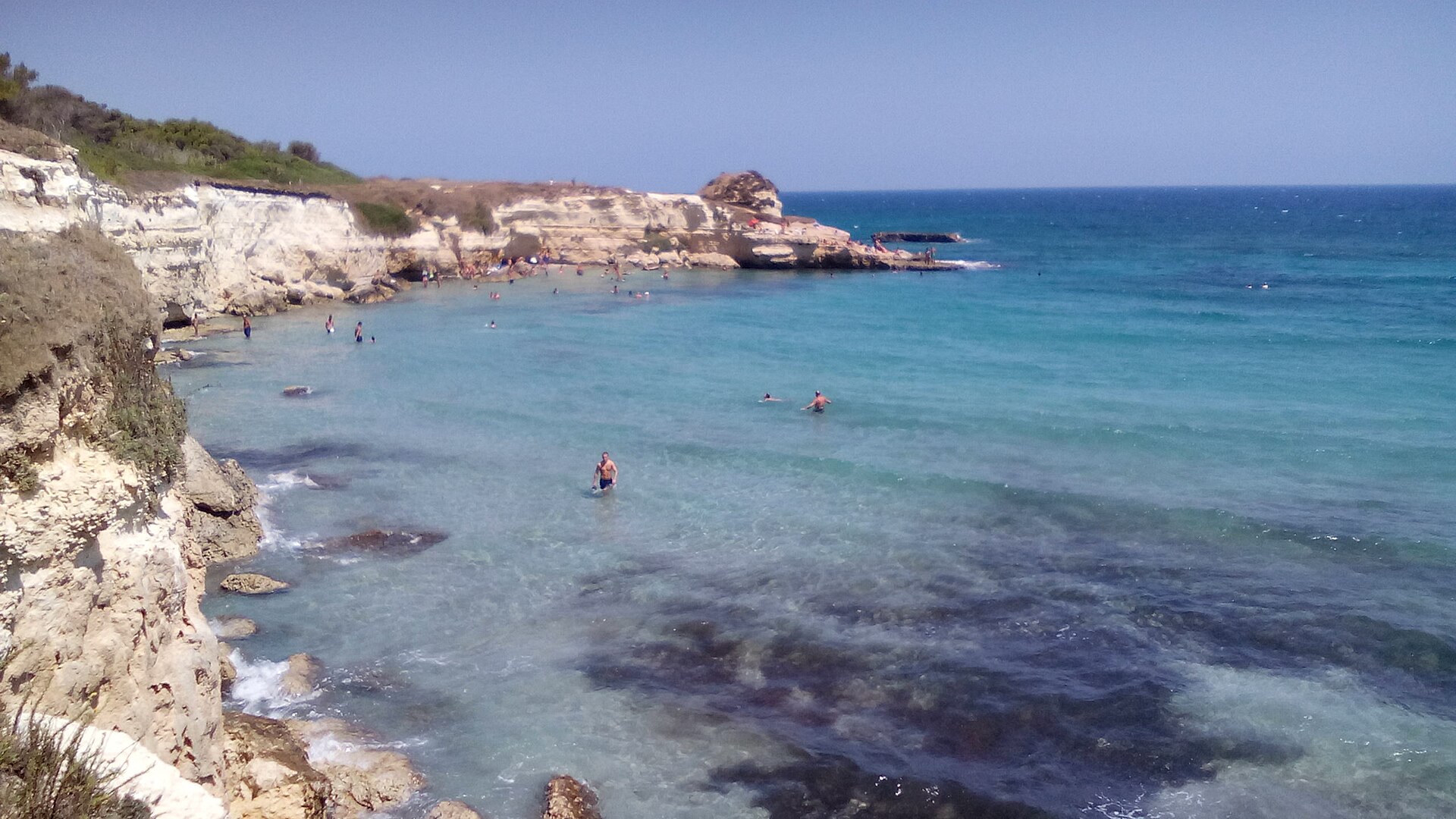
More rock than sand: sea stacks and arches of white stone with small inlets where the water stays beautifully clear. Perfect for those who love diving off the low rocks and snorkelling.
Specchiollarough sea · water 22 °C
Further north, towards Brindisi: sand alternating with low rocks and shallow water, easy with children.
Ionian Salento: the “Caribbean” white beaches
This is the side of the white sandy expanses and the shallow, turquoise seabed. When the Adriatic is rough, the Ionian is often the right choice - which is exactly why in Puglia it's always worth comparing the two coasts.
Pescoluse - the Maldives of Salentocalm sea · water 22 °C
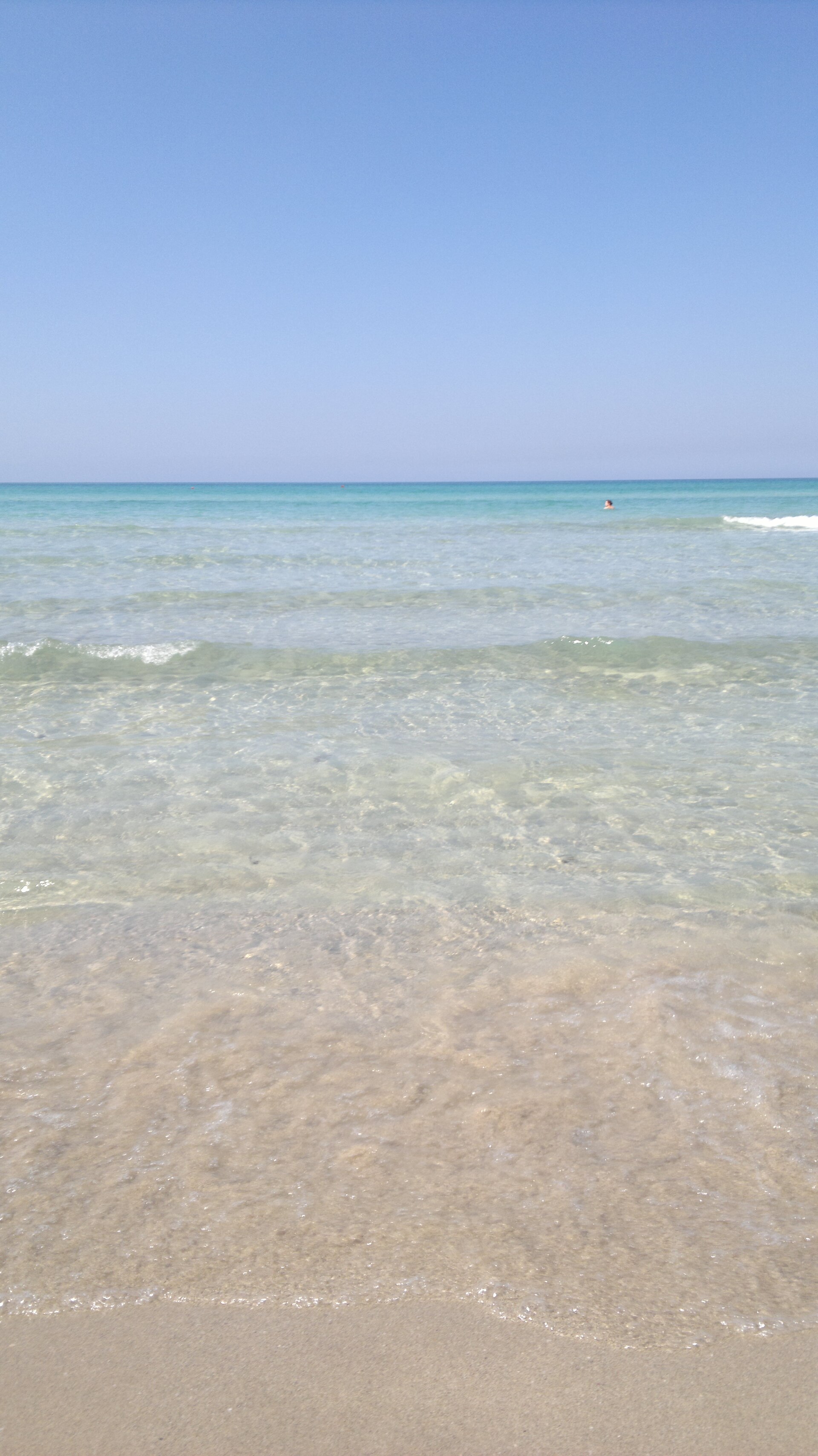
The most famous white beach in Puglia, in the municipality of Salve: very fine sand and shallow, clear water. We've devoted a separate guide to it.
Sant'Isidorosea with a few waves · water 22 °C
In the territory of Nardò: sand and low rocks around a coastal tower, with small coves and clear water. A good compromise between beach and rocky shore.
Santa Maria al Bagnoslightly choppy sea · water 22 °C
A seaside village of Nardò with a sandy beach and stretches of rock. A few steps away are the Quattro Colonne, excellent for snorkelling.
Porto Selvaggioslightly choppy sea · water 22 °C
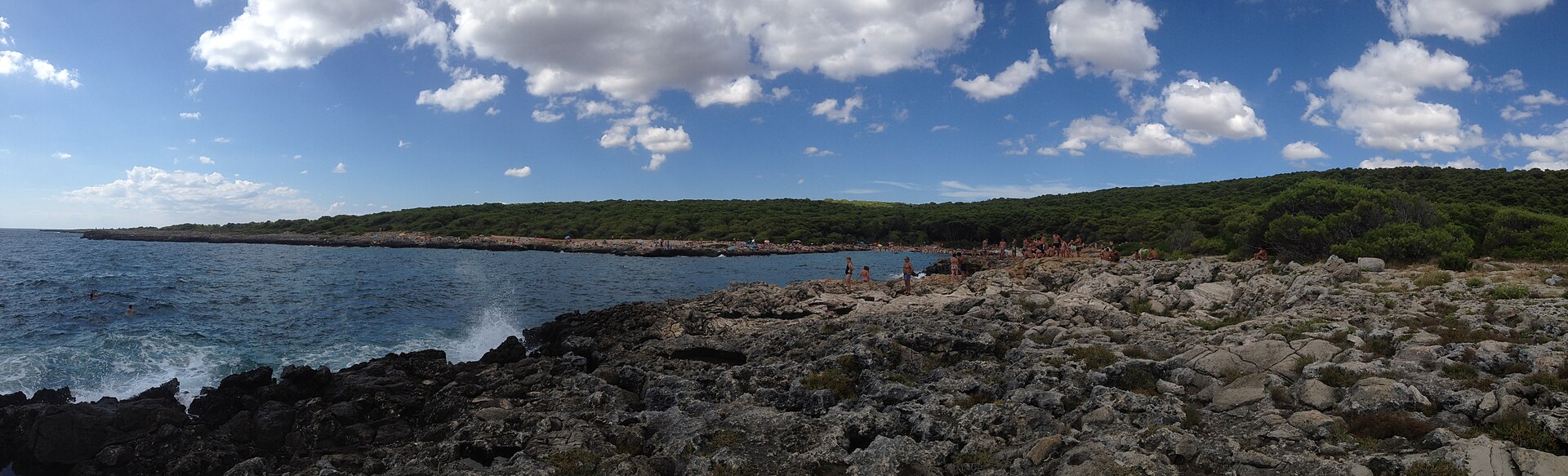
A bay of rocks and pebbles inside a regional nature park of Aleppo pines: no beach clubs, just nature. It's reached on foot; the water is cool and beautifully clear, among the best for snorkelling.
Baia di Uluzzoslightly choppy sea · water 22 °C
Quattro Colonneslightly choppy sea · water 22 °C
Two rocky Ionian coves: Uluzzo, secluded, inside the Porto Selvaggio park; Quattro Colonne, at Santa Maria al Bagno, with the remains of an ancient structure and a seabed perfect for mask and fins.
Which is the most beautiful beach? It depends on the wind
There's no such thing as “the” most beautiful beach in absolute terms: there's the one that's most beautiful today. A postcard-perfect bay with an onshore wind turns murky and blustery; a sheltered rocky shore can give you a perfect day. That's why MareCalmo takes into account each beach's exposure to wind and waves, and ranks the spots according to how suited they are to the activity you've chosen. If you want to learn how to read the sea and weather, start with the guide.
Practical tips
- Go early. In the morning the sea is generally calmer, before the breeze picks up, and you'll find parking more easily.
- Water shoes for the rocks. On rocky shores and stony coves the seabed is sharp and sometimes slippery.
- Respect dunes and protected areas. Many of these stretches are fragile: stay on the paths and don't leave litter behind.
- Check flags and ordinances. The Coast Guard's notices always come before the forecast.
Frequently asked questions
Which is the most beautiful sea in Puglia, the Adriatic or the Ionian?
The Ionian (Ionian Salento) has the white beaches and the most “Caribbean” shallow waters; the Adriatic offers more spectacular cliff scenery, especially on the Gargano. The best choice on any given day depends on the wind: that's why it's worth checking the sea state before you set off.
When is the sea calmest in Puglia?
Generally early in the morning, before the breeze picks up, and on days without a stiff wind. The calm sea today page shows you in real time where to find it right now.
Can you swim at the Grotta della Poesia?
No: swimming is banned by ordinance, as it's a fragile archaeological site and dangerous from a geomorphological point of view. It's a place to visit, not a beach.
Some links are affiliate links: booking helps support MareCalmo, at no extra cost to you.