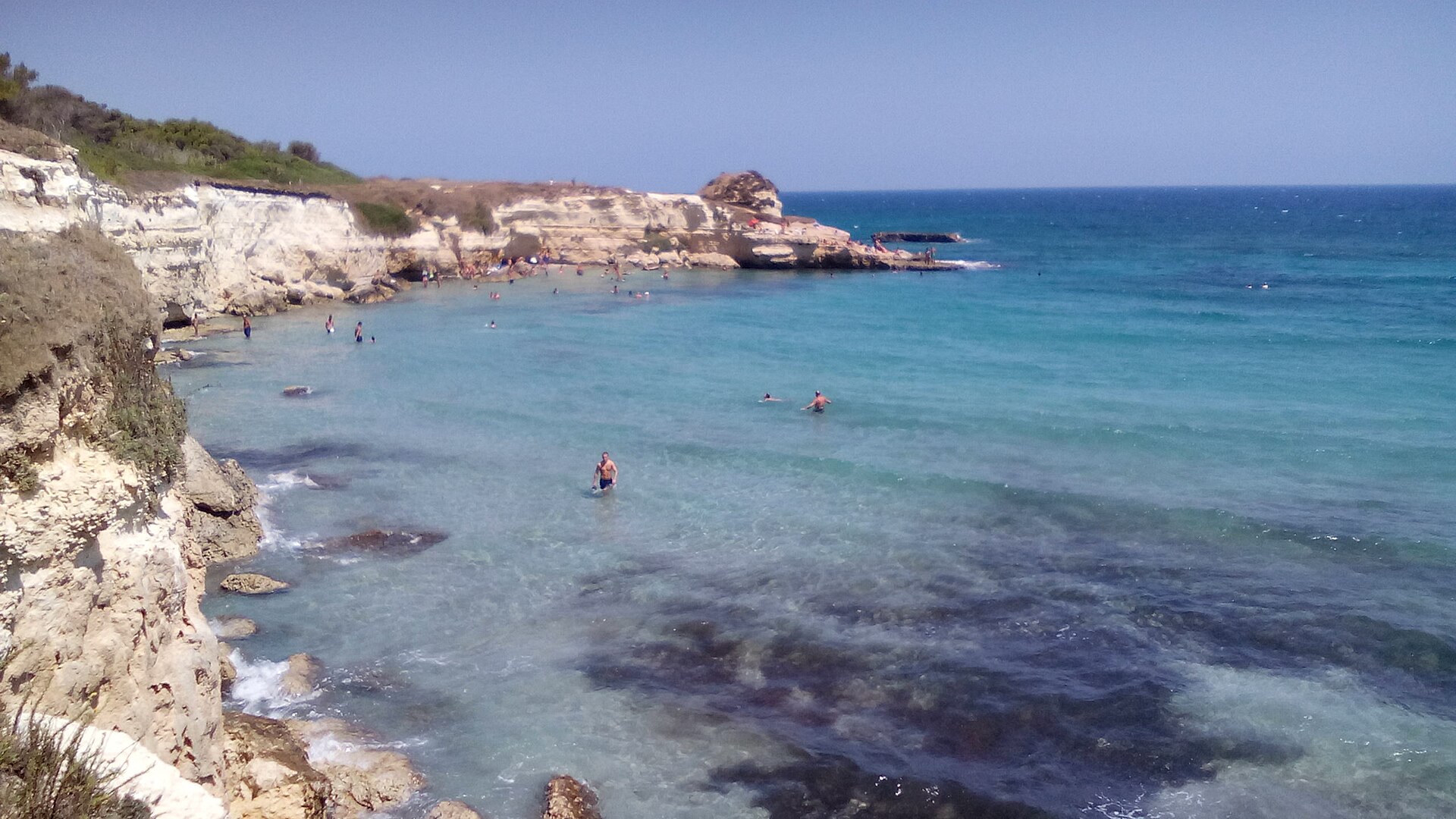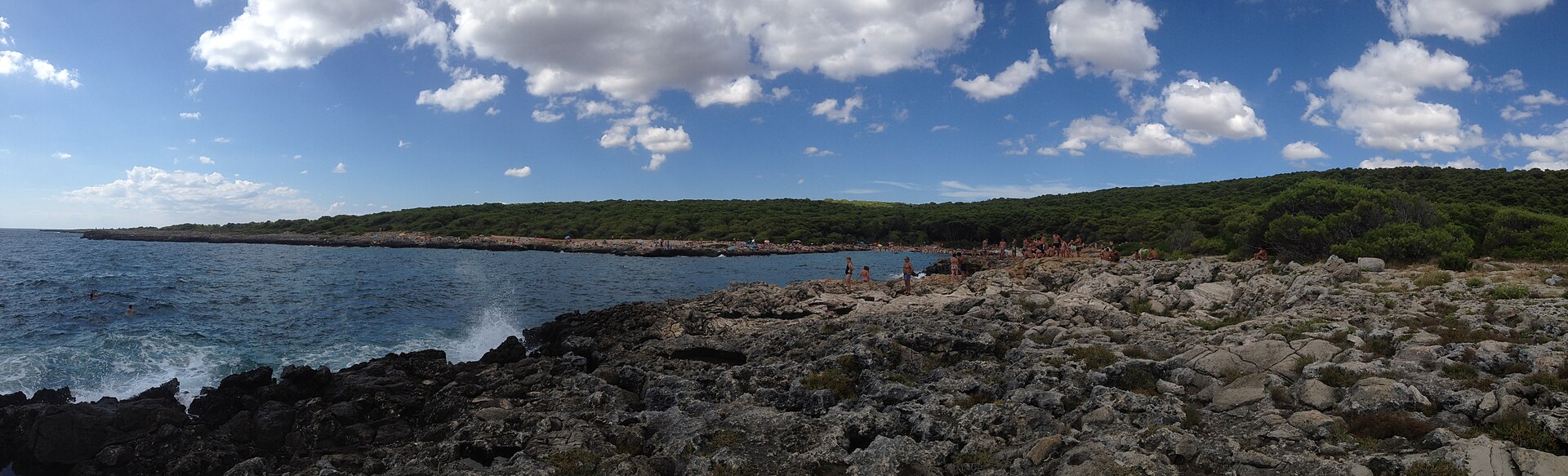
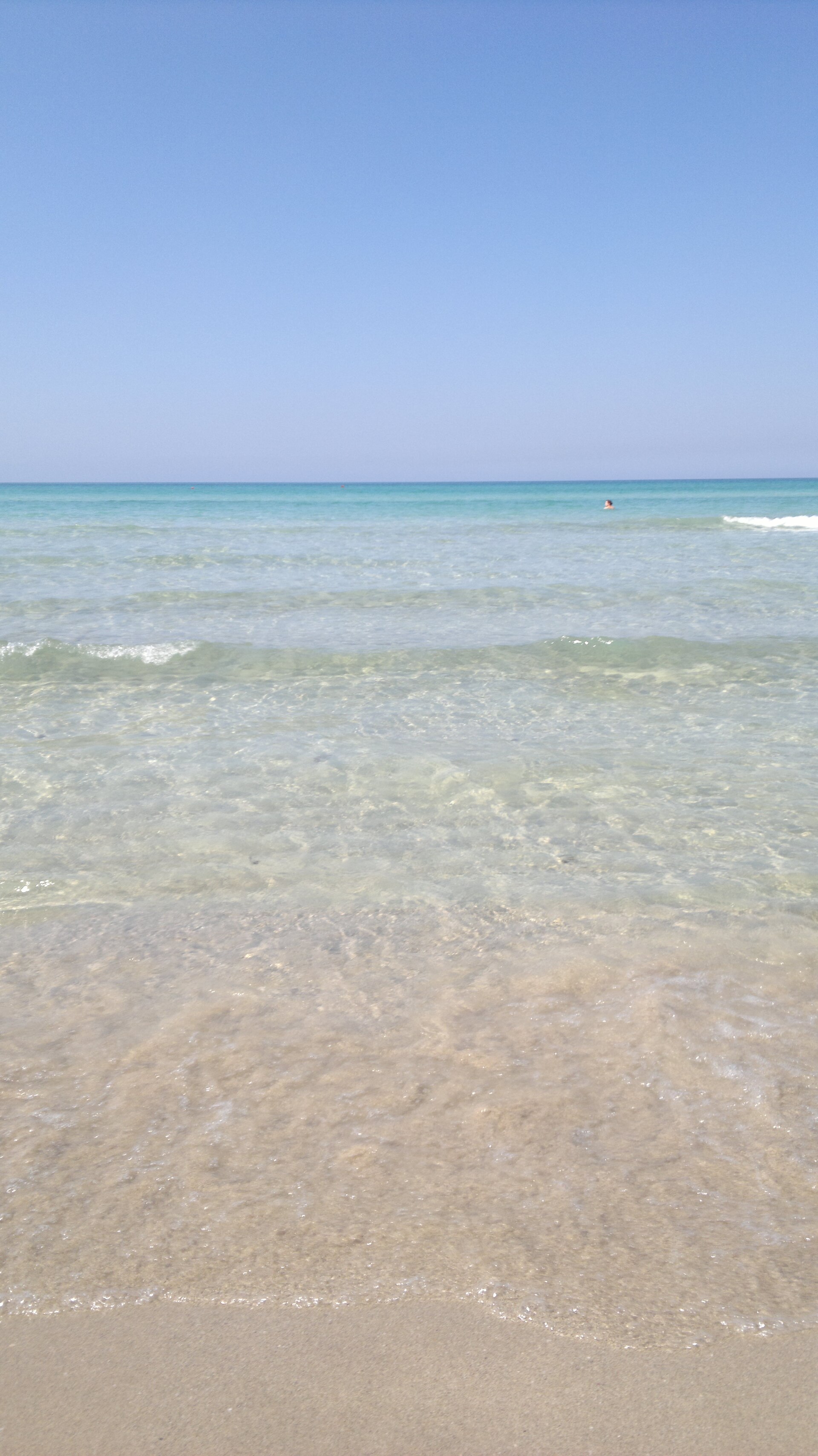
White sand and shallow, transparent water on the Ionian coast: what the Maldive del Salento are, where they are, what the seabed is like and when the sea is truly calm.
“Maldive del Salento” (the Maldives of Salento) is the nickname for the stretch of Ionian coast in the municipality of Salve, in the province of Lecce: a ribbon of fine white sand facing a shallow, transparent sea that, on the right days, turns a postcard turquoise. It is not a tropical island nor an official name, but one of the most beautiful sandy beaches in Italy and a small symbol of Salento.
Its heart is the beach of Pescoluse, the hamlet that gives this coastline its best-known name. The same white sand continues along the Salve seafront, alternating free public stretches with serviced areas. Below you'll find today's sea conditions for the main public sections.
The public beaches of Salve, today
Pescolusecalm sea · water 22 °C
The most famous and photographed stretch: very fine white sand and shallow water. It's also the busiest in high season, so it's worth arriving early.
Posto Vecchiocalm sea · water 22 °C
A little further north, still within the municipality of Salve: the same pale sand and the same shallow sea, with free public stretches that are generally a bit quieter than the heart of Pescoluse.
Where they are
We're in the lower Ionian Salento, between Gallipoli and Santa Maria di Leuca, just a few kilometres from the very tip of the peninsula. The Salve coastline faces south-west: it's a low, sandy shore with no rocks, backed by dunes and Mediterranean scrub, partly protected.
Why the water is so shallow and clear
The defining feature of the Maldive del Salento is the seabed that slopes extremely gently: the water stays waist-high for dozens of metres offshore. This makes the area perfect for families with children and produces, when the sea is still, those pale colours that made the beach famous. It's also the reason why just a little wind or a bit of swell is enough to cloud the water: the very fine sand lifts easily.
When to go: watch out for the wind
Being a low coast exposed to the west/south-west, the sea at the Maldive del Salento is stunning with the tramontana or an offshore wind, while it can turn cloudy and choppy with the libeccio or scirocco. In the afternoon the breeze tends to pick up: the calmest moment, with the clearest water, is usually early morning. This is exactly the kind of difference that MareCalmo works out by taking the beach's exposure into account, so you don't make the trip for nothing. To understand how we read wind and waves, see the guide.
Practical tips
- Arrive early: in summer the car parks and free stretches fill up quickly, especially at the weekend.
- Bring your own shade: on the free beach there's no natural shelter and the UV index here in summer is very high.
- Respect the dunes: they're a fragile, protected environment; use the marked pathways.
Frequently asked questions
Why are they called the “Maldive del Salento”?
Because of the very fine white sand and the shallow, transparent water that, on windless days, recalls tropical seas. It's a tourist nickname: the actual spot is the beach of Pescoluse, in the municipality of Salve.
Is the water always this clear?
No: it depends on the wind. With a rough sea or an onshore wind the very fine sand lifts and the water turns cloudy. It's worth checking today's sea conditions (above) before setting off.
Are there free public stretches?
Yes: along the Salve seafront, between Pescoluse and Posto Vecchio, serviced areas alternate with wide stretches of free public beach.
Some links are affiliate links: booking helps support MareCalmo, at no extra cost to you.