From the Poetto to the Capo Carbonara coves: the most beautiful public beaches of southeastern Sardinia, with the right tip for every wind and today's sea state.
Southeastern Sardinia lines up the coast of the regional capital and the postcard beaches of Villasimius. It starts at the Poetto, the great urban beach of Cagliari, and runs down the coast to the Capo Carbonara headland, inside the marine protected area: white and pink sands, turquoise waters and coves set into the granite.
Below are the most beautiful public beaches, each with today's sea conditions: tap a row to open the full card with waves, wind and water temperature.
The Poetto: the beach of Cagliari
Poettoflat sea · water 24 °C
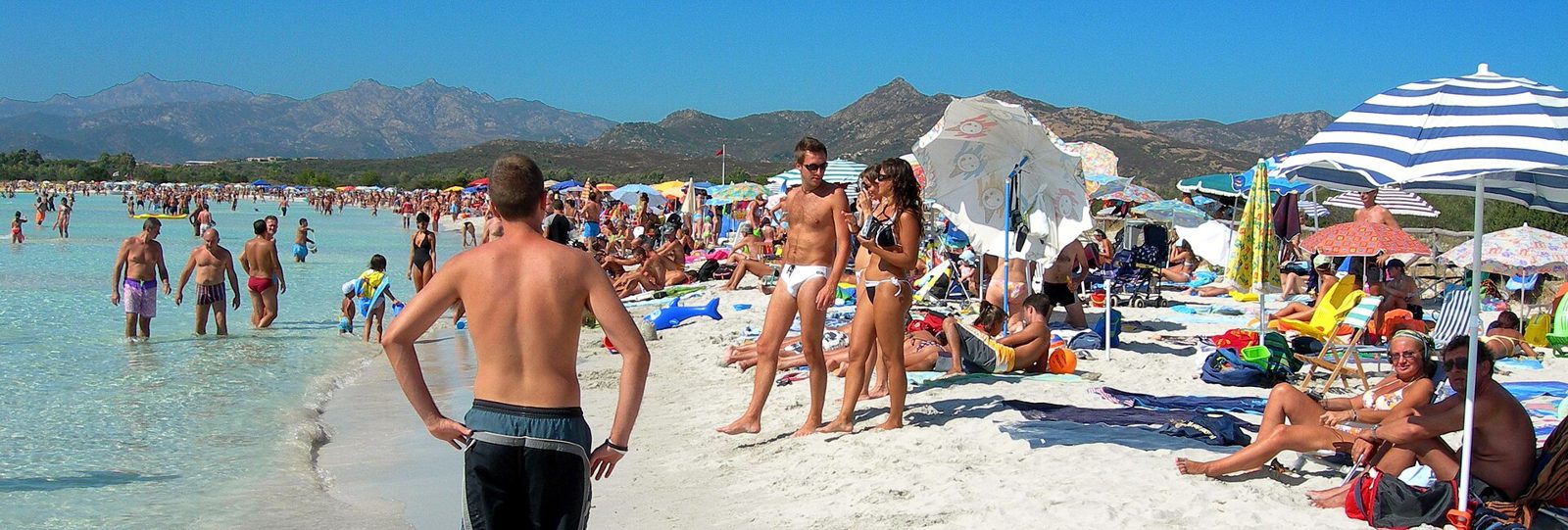
The great beach of Cagliari and Quartu Sant'Elena: a shore of pale, fine sand several kilometres long, at the foot of the Sella del Diavolo. Convenient and well served, it is at its best in a mistral, which leaves it clear with little surf; with a scirocco from the southeast the sea rises and becomes windsurf and kitesurf territory.
The coast in between: Mari Pintau and Solanas
Between Cagliari and Villasimius the coast road runs among granite headlands and small bays, with a few stops worth the detour.
Mari Pintauflat sea · water 24 °C
The name means painted sea: the water changes colour from turquoise near the shore to deeper blue further out. The beach is made mostly of smooth granite pebbles, with stretches of pale sand towards the water and Mediterranean scrub behind it.
Solanasflat sea · water 24 °C
A bay of pale sand tucked between the hills, along the road to Villasimius. Sandy seabed and clear water, with some services in the village: a handy stop before reaching Capo Carbonara.
Villasimius: Simius, Porto Giunco and the Capo Carbonara coves
Around Villasimius the best of the southeast is concentrated: beaches inside the Capo Carbonara marine protected area, with very white sand, emerald waters and coves sheltered on different sides.
Simiuscalm sea · water 25 °C
The town beach of Villasimius, a long semicircular bay just southeast of the town, closed to the north by the Porto Luna headland. Crystal-clear sea from green to blue and a gently sloping seabed, in a sheltered position.
Porto Giuncocalm sea · water 25 °C
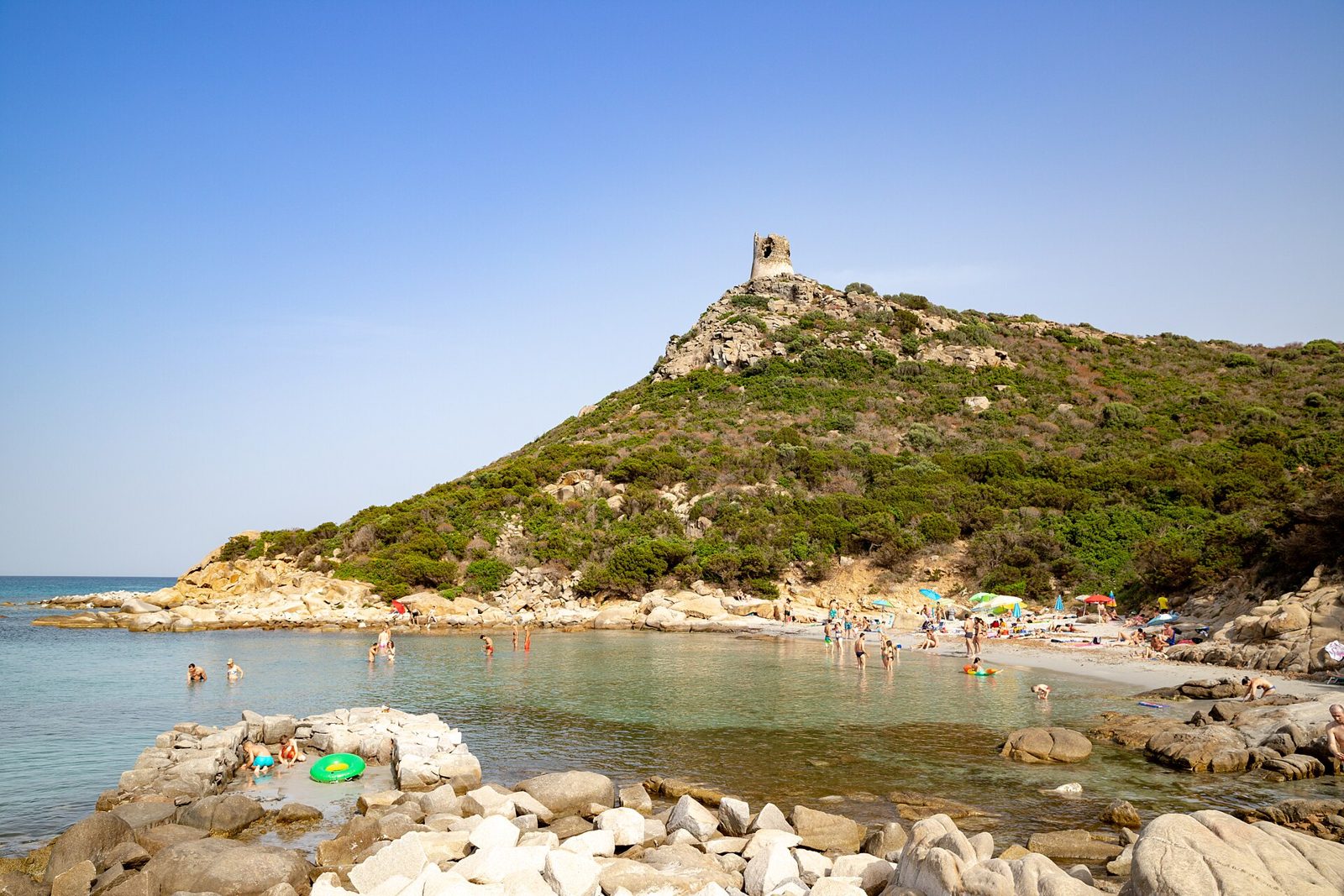
Nicknamed the beach of two seas: a tongue of sand squeezed between the sea and the Notteri pond, dominated by the tower. Pale sand with pink tones, a very shallow, sandy seabed, ideal for children.
Cala Caterinaflat sea · water 25 °C
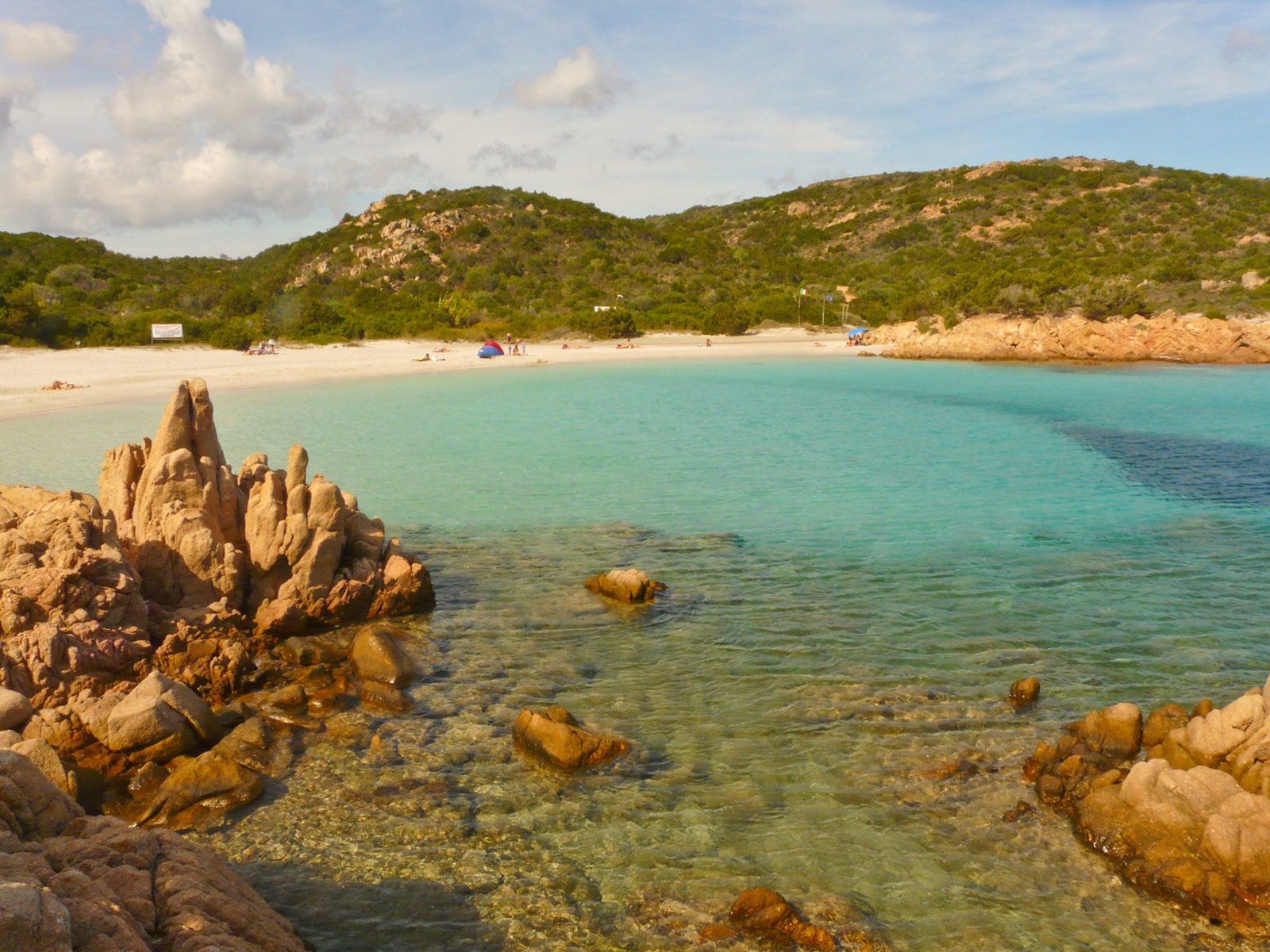
A tucked-away cove near Capo Carbonara, actually made of two small beaches of fine, very white sand. The sea shifts from blue to emerald green, among granite cliffs and Mediterranean scrub that shelter it.
Spiaggia del Risocalm sea · water 25 °C
It takes its name from the white quartz grains polished by the sea, like grains of rice. Clear water and a shallow, sandy seabed, bordered by granite rocks and scrub: close to the port of Villasimius.
Punta Molentiscalm sea · water 25 °C
A tongue of soft, very white sand joining the mainland to a granite headland, washed by the sea on two sides. The setting, among rocks and scrub, is one of the most photographed in the area.
When the sea is calm between Cagliari and Villasimius
The prevailing wind in Sardinia is the mistral, from the northwest. This stretch of coast mostly faces south and southeast, so at the Poetto and on many beaches the mistral comes from the land and leaves the sea calm and clear; it is the winds from the southeast (the scirocco) and from the east that raise the waves. The Villasimius coast is jagged, with coves facing different directions: when one side catches the wind, you can often find a sheltered one on the other side of a headland. The practical rule: in a scirocco, look for the coves sheltered to the southwest and switch away from the beaches exposed to the east. MareCalmo takes into account each beach's exposure to wind and waves, so you can see at a glance where the sea is calmest today.
Practical tips
- Check Punta Molentis. In summer there is capped access, a ticket and a parking booking: check this year's rules and fees before you set off.
- Go early. In the morning the sea is usually calmer, before the breeze picks up, and parking is easier to find.
- Respect dunes and seabeds. Many beaches are inside the Capo Carbonara marine protected area: stay on the paths, leave no litter and follow the area's rules.
- Check flags and ordinances. The Harbour Master's notices always come before the forecast.
Frequently asked questions
How does access to Punta Molentis work?
In summer the beach is regulated: there is a daily limit on people (a maximum of 600) and an entry ticket, with parking booked through the municipality of Villasimius's dedicated portal (Pass Villasimius). Rules, fees and dates are set each year by ordinance, so it is best to check before you set off.
Which is the most beautiful beach in Villasimius?
Porto Giunco and Simius are among the most famous, but the best beach depends on the day and the wind. The coast is full of coves facing different directions: with the right wind one is perfect, with the wind against it you are better off switching sides. Check the sea conditions before you set off.
When is the sea calmest?
Usually early in the morning and, in a mistral, at the Poetto and on the beaches facing south. The calm sea today page shows you in real time where to find it now.
Some links are affiliate links: booking helps support MareCalmo, at no extra cost to you.